World Cup 2026 Group J
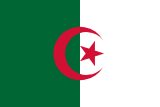
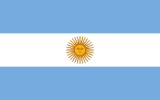
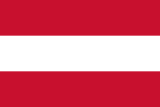
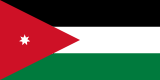
Algeria, Argentina, Austria, Jordan
Argentina, Algeria, Austria, and Jordan form Group J, anchored by the defending champions and Lionel Messi's likely final World Cup. Argentina must transition a title-winning squad while carrying the emotional residue of Qatar's triumph. Algeria, rebuilt under Vladimir Petković after the 2022 qualifying collapse on away goals to Cameroon, bring Ismaël Bennacer's midfield control and a point to prove. Ralf Rangnick's Austria won their UEFA qualifying group ahead of Sweden with a high-pressing identity designed to disrupt opponents who expect to dominate the ball. Jordan make their World Cup debut, the first Jordanian team to reach this stage, with a region's hopes and nothing to lose. Argentina should win the group. Algeria versus Austria for second is the tournament's most evenly matched contest.
Group J Standings
Upcoming Group J Matches
Completed Group J Matches
Teams in Group J
Group J Analysis
Argentina begin as defending champions, and Lionel Messi's farewell tour adds weight that no other team carries. Algeria and Austria both won their qualifying groups and both arrive with a point to prove — Algeria that 2014's round of 16 was not a fluke, Austria that 1954's third place is not the ceiling. Jordan make their World Cup debut carrying a region's hopes as the first Jordanian side to reach this stage. Argentina should win it; the contest between Algeria and Austria for second may decide the group's entire impact on the bracket.
Algeria
The last-minute defeat to Cameroon in Blida that eliminated Algeria on away goals in 2022 qualifying triggered a program-wide reset. Vladimir Petković inherited the aftermath and has restored structure without sacrificing the attacking identity that won the 2019 Africa Cup of Nations. Riyad Mahrez, now 35, remains the creative reference point, his left-footed deliveries and ability to manufacture chances from nothing still central to Algerian attacks. Ismaël Bennacer anchors midfield with passing range and defensive awareness; Amine Gouiri has emerged as the dynamic forward linking midfield to attack. Algeria's 2014 World Cup remains their best performance, a round of 16 where eventual champions Germany needed extra time to survive. The current squad blends that memory with younger legs, though the defensive unit is less settled than the attack. Algeria are strongest when Bennacer controls tempo and Mahrez receives in half-spaces; they are vulnerable when pressed aggressively, a weakness Rangnick's Austria will target. A round of 16 appearance would match 2014's achievement.
Argentina
Lionel Messi enters his final World Cup at 38, his role evolved from the all-consuming creative force to a positional conductor operating in pocketed spaces, preserving his legs for moments only he can produce. Lionel Scaloni's Argentina arrive as defending champions after the penalty-shootout victory over France in 2022 that resolved Messi's long pursuit of the trophy. Julián Álvarez has emerged as the primary goal-scoring threat, his pressing and movement giving Argentina a forward who scores and creates. Enzo Fernández controls tempo from midfield; Rodrigo De Paul supplies the defensive industry that lets Messi and Álvarez conserve energy for attacking phases. Argentina topped CONMEBOL qualifying, an 18-match campaign testing depth and resilience in ways no other confederation replicates. The transition from the 2022 generation is the weakness: Nicolás Otamendi is 37, Ángel Di María has retired, and the younger defenders lack tournament experience. Defending the title is the ceiling; a quarter-final exit if the draw turns unfavourable is the floor.
Austria
Ralf Rangnick has turned a program absent from the World Cup since 1998 into one of Europe's most tactically coherent sides. Austria won their UEFA qualifying group ahead of Sweden and Belgium, a result announcing them as a tournament threat. The Rangnick identity is unmistakable: high-intensity gegenpressing and vertical passing into channels, winning the ball back within seconds of losing it. David Alaba organizes the back line while initiating attacks with his passing range. Marcel Sabitzer supplies the engine in midfield, his box-to-box running and late arrivals into the box giving Austria a goal threat from deep. Konrad Laimer's work rate in the press triggers the entire system. Austria scored 22 goals in ten qualifying matches, evidence of how the press creates chances before opponents organize. The vulnerability is structural: Rangnick's high line leaves space behind fullbacks, and elite counter-attacking teams exploit that ruthlessly. Argentina's transition speed is specifically designed for this. A round of 16 appearance would validate Rangnick's project; advancing behind Argentina is the minimum.
Jordan
A 5-4-1 compressing space between the lines, daring opponents to break them down through patient possession rather than transitional chaos: this is Jamal Sellami's approach, and against Argentina and Austria it may be Jordan's only viable option. Musa Al-Taamari, the Lille forward, is the squad's standout, his pace and directness on the counter giving Jordan a threat opponents cannot dismiss. Yazan Al-Naimat provides physical presence up front, his hold-up play offering an outlet when the midfield is pinned deep. The rest of the squad is drawn from the Jordanian domestic league and smaller Gulf leagues; facing Messi or Bennacer is a level of opponent they have not encountered in competitive fixtures. Jordan are the first team from their country to reach the tournament, a result capping a decade of steady improvement. Their path to a result flows from defensive discipline and the hope that Al-Taamari wins individual duels in transition. A World Cup goal would be historic; a point would exceed expectations.
Key Matchups
Argentina versus Algeria on matchday one carries cultural resonance beyond the pitch: diaspora connections between Buenos Aires and Algiers, a shared immigrant history. The football context is simpler: the defending champions against a team waiting a decade to improve on its best World Cup performance. Messi versus Bennacer in the half-spaces, Álvarez against an Algerian back line tested in ways CAF qualifying could not replicate. Algeria versus Austria on matchday three could decide second place directly. Rangnick's press against Bennacer's control, a clash of philosophies where the team that dictates tempo wins. Austria's high line against Algeria's counter-attacking speed exposes a weakness neither manager fully controls. Jordan's most realistic target is disrupting the narrative against whichever favourite needs a result late in the group.
Knockout Pathway
The Group J winner draws the Group I runner-up in the Round of 32, likely Senegal or Norway. The runner-up faces the Group I winner, almost certainly France. Third place enters the pool of eight best third-placed finishers, drawn against a group winner from another section. With Argentina expected to win the group, the real contest is between Algeria and Austria for second, and the consequence is stark: second place likely means France in the Round of 32. The Round of 32 runs from 28 June to 3 July 2026.