World Cup 2026 Group I
France, Iraq, Norway, Senegal
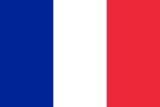
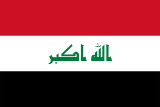
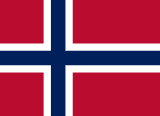
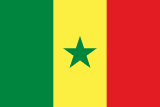
France, Senegal, Iraq, and Norway form Group I. The 2018 champions and 2022 runners-up face an African champion built on a quarter-final run, an Asian side ending a 40-year absence, and a European nation whose striker every opponent game-plans around first. France bring the tournament's deepest squad and the memory of a penalty-shootout loss in the last final. Senegal proved they belong at this level with a 2022 round of 16 appearance. Norway's Erling Haaland scores at a rate no other forward matches. Iraq, back for the first time since 1986, defend compactly enough to frustrate all three opponents. France should top the group; the contest for second between Senegal and Norway is the section's main thread.
Group I Standings
Completed Group I Matches
Teams in Group I
Group I Analysis
France carry the weight of a 2022 final loss and a squad deep enough to absorb almost any setback. Senegal's quarter-final run in 2022 proved they belong at this level, and Iliman Ndiaye gives them a different attacking dimension. Iraq return for the first time since 1986 with a side that can turn matches scrappy and emotional. Norway won a qualifying group that included tough European opposition and have Odegaard's creativity to unlock any defence. The battle behind France is between three teams with genuine knockout aspirations.
France
Kylian Mbappé enters the tournament as captain and the player no opponent can fully prepare for: pace in transition and clinical finishing, and the memory of a hat-trick in a final that was not enough. Didier Deschamps has been in charge since 2012, producing two World Cup finals, one trophy, and a European Championship final, a record unmatched by any active international coach. Antoine Griezmann remains the tactical chameleon connecting midfield to attack, his work rate compensating for physical decline. France's squad depth is the tournament's deepest. Aurélien Tchouaméni and Eduardo Camavinga provide midfield options most nations would start; the forward line behind Mbappé includes Ousmane Dembélé, Randal Kolo Muani, and Marcus Thuram. France topped their UEFA qualifying group unbeaten, scoring freely and conceding sparingly. The vulnerability is psychological: complacency against opponents France expects to beat, and the 2002 group-stage exit as defending champions remains a cautionary reference. A semi-final is the realistic expectation; anything less underperforms.
Iraq
A 4-2-3-1 that concedes territory but rarely concedes clear chances: this is what Jesús Casas has built, and it is Iraq's best hope in a group featuring Mbappé and Haaland. Aymen Hussein provides the physical focal point at centre-forward, his hold-up play giving Iraq an outlet when the midfield is overrun. Ali Jasim offers pace on the counter from the wing, and Amir Ammari's dribbling from central midfield creates transitions that unsettle structured opponents. Iraq's 2007 Asian Cup win remains the nation's greatest football achievement, and a 2023 Asian Cup semi-final under Casas proved the team can compete beyond its confederation. The 40-year wait since their last World Cup appearance ended with qualification, but most of the squad plays in the Iraqi domestic league or smaller Gulf leagues. Facing Mbappé or Haaland is an order of difficulty they have not encountered. Iraq will not dominate possession against any opponent here. Their path to a result runs through defensive discipline and set-piece conversion.
Norway
Erling Haaland's goal rate at Manchester City, exceeding a goal per game across multiple seasons, makes him the player every opponent structures their defensive plan around. Norway have not played a World Cup match since 1998, but Haaland alone gives them a chance in any single game. Martin Ødegaard supplies the creative passing from attacking midfield, his vision converting Haaland's movement into scoring chances. Ståle Solbakken delivers the ball into dangerous areas early, overlapping fullbacks providing width and Ødegaard as the creative hub. Norway conceded only seven goals across ten qualifying matches, a record built on defensive solidity and Haaland's finishing. The weakness is tournament inexperience. The squad beyond Haaland and Ødegaard features players from mid-level European leagues, not the Champions League regulars populating France's bench. Norway's 1998 campaign ended in the round of 16; matching that would represent a successful return.
Senegal
Papa Bouba Diop's goal sank the defending champions in the 2002 opener; 24 years later, Senegal remain defined by that shock. Aliou Cissé has coached the team since 2015, delivering an Africa Cup of Nations title in 2022 and back-to-back World Cup qualifications. The current generation matched 2002's trajectory in Qatar, reaching the round of 16 before falling to England. Sadio Mané's fitness decides how far this team goes. When he is sharp, the attack has a cutting edge that troubles any defence. Iliman Ndiaye provides creativity from the right, and Pape Matar Sarr's emergence at Tottenham gives the midfield technical quality previous Senegal teams lacked. The defensive spine, anchored by Kalidou Koulibaly and Édouard Mendy, offers experience. The weakness is at full-back, where depth is thinner than at centre-back or in attack. A round of 16 is the realistic target. Matching 2002's quarter-final requires beating France or navigating a knockout path featuring several tournament favourites.
Key Matchups
France versus Senegal on matchday one revisits one of the World Cup's most memorable openings. In 2002, Papa Bouba Diop's goal sank the defending champions in Seoul. Both programs have transformed since, but the psychological echo remains. Mbappé versus Mané dominates pre-match coverage, though the tactical key lies in midfield: Tchouaméni against Pape Matar Sarr determines which team controls the transition moments where both sides are most dangerous. Norway versus Senegal on matchday three could decide the group. Haaland against Koulibaly, Ødegaard against Gueye: a direct contest between two teams with knockout ambitions. Iraq's best chance of a result comes against whichever opponent enters a match needing to win but struggling to break down a compact defensive structure.
Knockout Pathway
The winner of Group I faces the Group J runner-up in the Round of 32, likely drawing Algeria, Austria, or Jordan. Finishing second flips the draw to the Group J winner, almost certainly Argentina, a test of knockout credentials from the start. A third-place finish enters the pool of eight best third-placed finishers, matched against a group winner from another section, a harder route. With France expected to top the group, the real stakes are second and third: Senegal or Norway will want to avoid dropping to third, which replaces a beatable knockout opponent with a group winner. The Round of 32 runs from 28 June to 3 July 2026.